Skip To Main Content
Menu Call Location
Call: 203-926-1897 110 Commerce Dr., Shelton, CT 06484
  • Home
  • Your Team
    • Our Physicians
      • Abe Fridman, DO
    • Our Staff
    • Our Facility
  • Your Weight Loss Surgery
    • Gastric Banding
    • Gastric Bypass
    • Gastric Sleeve
    • Revision Bariatric Surgery
    • da Vinci® Robotic Bariatric Surgery
  • Comprehensive Support
    • Community
    • Planetree Philosophy
    • On Track Program
    • Support Groups
    • Bariatric Exercise
    • Fitness Center
    • Post Surgery Nutrition
    • Concierge Service
  • Resources
    • Find a Free Seminar
    • Find a Support Event
    • FAQ
    • Financing and Insurance Form
    • Videos
  • Success Stories
  • Blog
    • Community Blog
    • In the Press
  • Contact Us
Close Menu
Category Header Image

Cafe

Have Your Root Vegetables and Eat Them, Too!

January 25, 2019

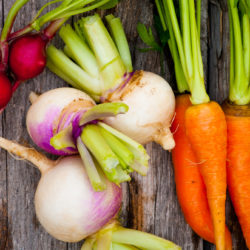
With winter upon us, you might find yourself wondering what vegetables you should be eating. The answer? Root vegetables! While certain root vegetables (such as white potatoes) are not recommended for bariatric surgery patients due to their high carbohydrate content, there are plenty of other (less starchy) options to choose from this winter season. Root vegetables are high in fiber (1 cup of cooked carrots has 5 grams), low in calories, and chock full of antioxidants that provide additional health benefits. Some root vegetables to try this season include: beets, turnips, rutabaga, and radishes. Beets: Studies have shown that eating beets (also known as beetroot) may help fight chronic inflammation, reduce blood pressure, and possibly even improve athletic performance [1]. In addition, this vegetable is high in fiber, which promotes regularity and reduces constipation (note that eating beetroot can cause red urine or stool). Beets can be roasted, steamed, or eaten raw. Add them to your salad or coleslaw, pair them with goat cheese or fruit, or get creative and make beets into a pesto or horseradish. TIP: the beetroot... Read More

Tips for Eating Healthy All Summer Long

June 28, 2018

Now is the perfect time to enjoy the outdoors and make the most of the higher temperatures and longer days, but summer, as wonderful as it is, presents some difficulties for bariatric surgery patients, too. Maintaining a healthy diet can prove daunting when so much tempting food abounds. Fortunately, you can have your fun and eat great too with these healthy tips for staying foodwise this season: Heading to the Water Whether it’s the local swimming pool, the beach, or lakeside, preparing for a day on the water is as easy as packing a picnic lunch. Skip the greasy spoons and bring hummus, veggies, sliced turkey, cheese cubes, grapes, and almonds in a cooler and you’ll stay full without the need for utensils. Visiting a Theme Park Many theme parks don’t allow outside food, which can present a special challenge to people trying to lose weight. Your best bet is to head online and research your dining options in advance, and be sure to enjoy a healthy breakfast before you go. If no options look ideal, it’s ok to choose... Read More

Could My Stomach Stretch After Sleeve Gastrectomy?

June 23, 2017

One of the most commonly performed bariatric surgeries, gastric sleeve surgery works by reducing the size of the stomach and limiting the number of calories that can be comfortably consumed. Since the procedure relies on minimizing the size of the stomach, many patients wonder if there is a risk of stretching the stomach, making it larger, and regaining the weight. The stomach is a very flexible organ, and some stretching is normal. When food is eaten, the stomach stretches to accommodate the material and alerts your brain when it has reached capacity so you know to stop eating. If someone continues to eat after this point, the stomach will stretch further. Stomachs that are regularly stretched to contain excess food will eventually become permanently larger. This can lead to difficulty determining fullness and cause feelings of hunger even when sufficient food has been consumed. As a result, a patient could gain weight after surgery if they routinely overeat. If overeating is a rare event, the stomach may stretch a bit but should shrink back to its original size, so most... Read More

Is a Nutrition Plan Necessary for Bariatric Success?

May 17, 2017

It’s not uncommon to hear potential weight loss surgery patients question whether they will be able to follow the strict dietary program that typically follows a bariatric procedure. Many worry it will be too difficult, and others wonder how important it is to follow the nutrition program to achieve their goals. The truth is, following the dietary guidelines is essential to long-term weight loss, which is why our skilled bariatric surgeons and medical team gradually adapt you to a customized plan. This not only makes the transition to smaller portion sizes and healthier food easier, it helps to set you up for lasting success. Part of the reason bariatric surgery patients need to follow a nutrition plan is because stomach function often will be altered by the procedure. As a result, it can be uncomfortable for you to consume too much or to eat a lot of sugary, oily, or fried foods. It’s also important to follow our dietary guidelines so that you can intake nutrient-dense food that enhances your health and well-being. Each weight loss surgery has its own... Read More

Can Bariatric Surgery Change Your Food Drive?

April 24, 2017

Many patients experience a change in food preferences and tastes following bariatric surgery. While not everyone will notice such alterations, it’s a common enough phenomenon that it’s worth looking into the mechanism behind it. Our extensively trained weight loss surgeons and medical staff will help you through the various experiences following bariatric surgery, including an evolving appetite. Some of the most commonly reported changes in taste are aversions to certain foods, typically animal proteins like chicken, steak, and bacon, as well other foods like eggs and dairy products. A reduced craving for sweet, sugary, and fried foods is also normal. Interestingly, few individuals develop an aversion to fruits and vegetables. In most cases, these dislikes are strong in the beginning but begin to subside over time, allowing patients to enjoy many of their favorite foods again. As far as sugary and fried foods, you should try to limit those items anyway. If your aversion to food seems to be related to texture or an intolerance, it may help to change the preparation or substitute the food with another option. Animal... Read More

Previous Page Next Page
The Griffin Community
  • Cafe
  • Community Corner
  • Doctor's Office
  • Exercise
  • Fitness
  • News
  • Nutrition
  • Support
  • Weight Loss Surgery
Archive
  • 2026
  • 2025
  • 2024
  • 2020
  • 2019
  • 2018
  • 2017
  • 2016
  • 2015
  • 2014
  • 2013
  • 2012
  • 2011
  • 2010
Free Seminars

Register for our next free bariatric seminar

View Calendar
Support Groups

Every 2nd and 4th Tuesday of the month 6:00pm to 7:30pm

View Calendar
BMI Calculator
Submit
Get Started! We're here when you're ready
Attend a Free Seminar Find a Support Group
Connect Online
Call: 203-926-1897 Griffin Bariatrics110 Commerce Dr.,Shelton, CT 06484
Griffin Bariatrics Map
  • Home
  • Your Team
    • Our Physicians
      • Abe Fridman, DO
    • Our Staff
    • Our Facility
  • Your Weight Loss Surgery
    • Gastric Banding
    • Gastric Bypass
    • Gastric Sleeve
    • Revision Bariatric Surgery
    • da Vinci® Robotic Bariatric Surgery
  • Comprehensive Support
    • Community
    • Planetree Philosophy
    • On Track Program
    • Support Groups
    • Bariatric Exercise
    • Fitness Center
    • Post Surgery Nutrition
    • Concierge Service
  • Resources
    • Find a Free Seminar
    • Find a Support Event
    • FAQ
    • Financing and Insurance Form
    • Videos
  • Success Stories
  • Blog
    • Community Blog
    • In the Press
  • Contact Us
More From Griffin Health
  • Griffin Health Hospital
  • Griffin Hospital School of Allied Health Careers
  • Griffin Center for Healthy Living
  • Griffin Faculty Physicians
  • Yale-Griffin Prevention Research Center
  • Griffin Hospital Medical Education

Copyright © 2026 Griffin Bariatrics, All Rights Reserved.

Privacy Policy | Terms | SitemapAccessibility Statement

Bariatric Surgery Website by